

(I also wrote this for our Society and Culture blog. I wanted to share this with you because the topic is quite interesting and relevant.)
Some films are meant to entertain people, to make the audience feel relaxed, laugh or just escape the harsh reality for a while. As you might noticed, our group haven’t written a single independent film review, which is the focus of our study. This week’s lecture was all about Social Stratification and we found a film that perfectly depicted it: Lino Brocka’s ‘Maynila Sa Mga Kuko Ng Liwanag’.
Before we continue to the review, why don’t we first discuss what Social Stratification mean? (We’ll make it as brief as possible, don’t worry! ;))
Social stratification is a kind of social differentiation whereby a society groups people into socioeconomic strata, based upon their occupation and income, wealth and social status, or derived power. (Retrieved from: https://en.m.wikipedia.org/wiki/Social_stratification) To make it simple and understandable, Social Stratification is a way of categorizing social classes based on what they do for a living, how much money they earn, do they drive Lamborghini or just take the bus to work/school, do they live in a mansion or live in the slums. I don’t know if it’s only me, but whenever I hear the term “Social Stratification”, I always think about a pyramid—(Upper Class, Upper middle class, Lower middle class, Working Class, Lower Class).
The next thing that I’m going to say is entirely based on our own understanding:
Upper Class: These are the crazy rich people. People who comes from an affluent family (Political family or Business Tycoons). These are the powerful people that we cannot mess with. (Like the Marcoses, Aquinos, Sys, Gokungweis, Ayalas)
Upper middle class: These are the people who have higher job positions in companies. I’m not sure if successful celebrities belong here.
Lower middle class: These are the small (but not that small) business owners. For example, Filipino-Chinese families who own Hardwares, small restaurants and groceries. They could also be the family of lawyers and doctors. You get the idea.
Working Class: OFWs (Domestic Workers, Entertainers abroad), Call Center Agents, Teachers, Office clerks.
Lower Class: Street vendors, street sweepers, laundry maid, construction workers, factory workers.
I hope that it’s all clear, and now we’re going to proceed to the film review.
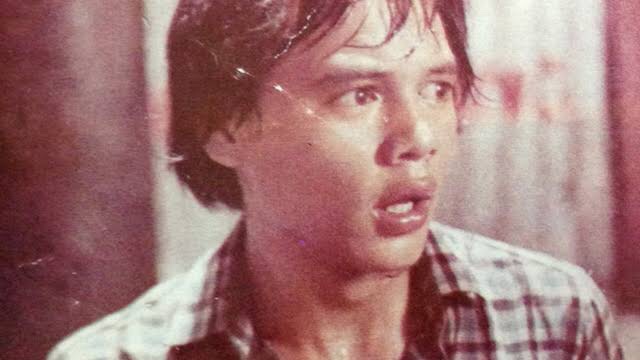
Manila in the Claws of Light (Maynila, sa mga Kuko ng Liwanag) is a 1975 Filipino drama film directed by Lino Brocka based on the novel In the Claws of Brightness by Edgardo M. Reyes, starring Bembol Roco (but he was credited as Rafael Roco, Jr. and this was his film debut) Hilda Koronel, Lou Salvador, Jr., and Tommy Abuel. It is considered by many as one of the greatest films of the Filipino Cinema.
The story revolves around 21-year-old Julio (Bembol Roco), who was a fisherman who took off to Manila to find his girlfriend Ligaya (Hilda Koronel). Because of their struggles in the province, Ligaya took the opportunity to sail to Manila, since a woman called ‘Mrs. Cruz’ promised her that she will earn some money and she will help her continue her studies. Julio followed her to Manila because Ligaya apparently stopped sending him letters. She was reportedly missing and was accused of running away and stealing Mrs. Cruz’ piece of diamond earring.
Julio found himself working as an oppressed construction worker, he also tried to be a call boy for a night. It turned out that Manila isn’t really great, well for some people like him who is in a lower class. I remember a character from a film said “Manila is heaven if you have a lot of money. But if you’re poor like us, it’s still hell.”
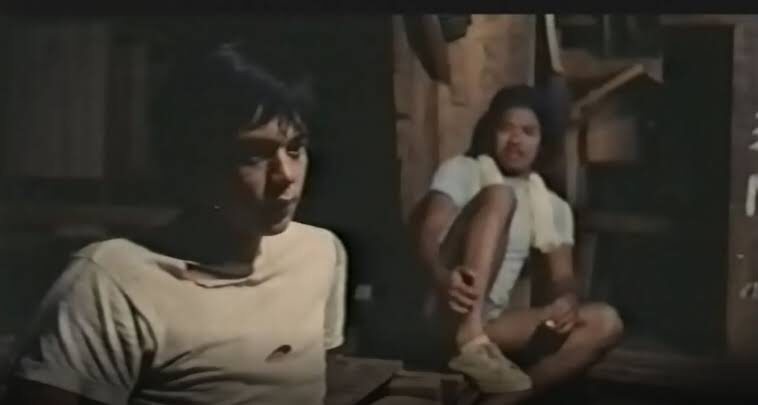
Aside from Julio, there are also other friends who shared his similar struggles. Benny (Danilo Posadas), was an aspiring singer. He also worked as a construction worker just like Julio. Because of lack of opportunity, he couldn’t pursue his dream. I felt really sorry for him because his character was full of positive energy even though his life sucks and he didn’t have any family. He accidentally died while working. Which made me cry.
And then we have Atong (Lou Salvador, Jr.), who became Julio’s close friend who always help him with everything, like a place to stay when he wasn’t allowed to sleep at the construction site anymore. Atong and his family used to own a farm land in their province. They were farmers back in the day until a rich man claimed their land. His father was shot by that rich man’s bodyguard while he tried to defend their land, which left him paralyzed. Atong and his sister Perla lived in squatters area with their father. Atong was killed after complaining about his salary from the construction gig, then the squatters area got burned down, their father was burned to death and Perla went away and was reportedly landed a job in the prostitution ring.
Imo (Pio De Castro), was initially poor in the narrative. While working as a construction worker, he was also taking up classes in college. He later quit his job in the construction site and was offered a job in advertising. This character had progression. Lucky him.
Let’s go back to the romantic side. Julio was able to reach Ligaya and as expected, she was forced to enter prostitution and was sexually abused by a Chinese lower-middle class man named Ah Tek. Ligaya had a baby and she couldn’t escape Ah Tek’s prison because he threatened to kill her if she do.
In the end, Ligaya was killed by Ah Tek, but because he has money, he told the police that it was just an accident and that Ligaya fell down the stairs (Just like how politicians and powerful families do to lower class people these days). Then furious Julio went to Ah Tek’s house and stabbed him multiple times with an ice pick. He was chased by the mob, he got cornered and he was really scared. No one knows if he was also killed by the angry mob.
What makes this film really good is that it focused on the lives in the lower class. I know there are also a lot of films about it, like Ishmael Bernal’s ‘Manila By Night’, which is all about prostitution and drugs in Manila. In the Marcos years, these horrible situations were hidden because they tried to make the Philippines look good and progressive in front of other countries. Just imagined a face full of acnes and foundations and concealers. That was what they were trying to do.
The film is trying to tell us that it is not the poor people’s fault if they remained poor. Because of their lack of opportunities and education, they couldn’t succeed. Not unless if they win a lottery or something. Poor people get poorer, rich people get richer. And it seems that poor people don’t have the right to complain. Just like in one of the scenes from this film when Julio asked why his salary was only P2.50 while others get P3.00, Mr. Balajadia (that sick son of a pig) told him that if he doesn’t want it then he could quit. Like, they have no choice but to accept everything even though it’s not right. Unlike privileged people, they can complain about their unexplainable salary deductions, or complain about the size of their chicken joy.
Filipinos in the middle class always prefer things that come from great companies like SM or imported brands. In other words, we only make the gods (Henry Sy, Gokungwei, Zobel de Ayalas and great foreign companies etc.) richer. Why can’t we help our fellow struggling Filipinos by supporting their small businesses?
The election is on its way, these Politicians are armed with their empty promises AGAIN, using the poor people to gain votes. It makes us angry.
How long should they live like this? How long can we take it?
 Movie Menu